Backstage Pass: Meet Kat Chan, the Set Designer Behind The Glass Menagerie

Welcome to Creative Industries: Backstage Pass, a new series from yoothz.com.au shining a light on the people building careers in the arts, and the paths they took to get there.

If you have ever sat in a theatre and wondered who dreamed up the world you are looking at, the towering walls, the worn furniture, the way the light falls just so, this series is for you. Because behind every set, every production, there is a person who made it happen. And most of them started exactly where you are now: curious, a little unsure, and wondering if a creative career is actually possible.

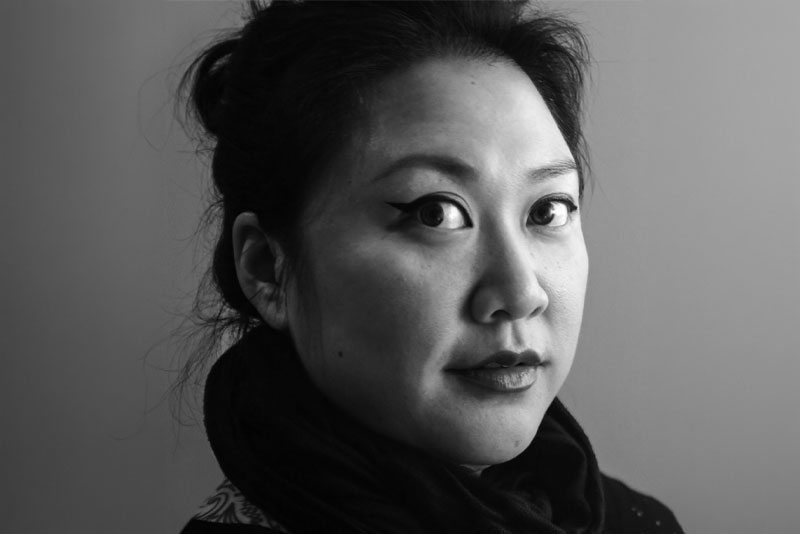
For our very first interview, we sat down with Kat Chan, the award-winning set designer currently working on The Glass Menagerie at Melbourne Theatre Company. Kat’s work spans theatre, dance, video installation and photography, and she also mentors the next generation of designers as a tutor in Performance Design at the Victorian College of the Arts.

We asked Kat about her path into the industry, what her job actually looks like day to day, the setbacks that shaped her, and  most importantly, what she would tell a young person who has no idea that “set designer” is even a job they could do.

Let’s head backstage with Kat Chan.
Q1.  Can you walk us through the path you took to become a set designer?

I studied and worked in architecture before returning to study Postgraduate Production Design and then Masters at VCA.

Q2. What was your first professional job in set design, and how did you land it?

My first professional job in set design was technically as a Design Assistant where I helped the set designer with research and model making/drawing. I got the job by word of mouth, someone from VCA had recommended me to the designer. The next step from there was being hired as a Design Associate which is more responsibility, depending on the designer you can be their proxy, help during the design process and even make decisions or supervise the build on their behalf. By the time I had my first design job for a professional performing arts company it was from having been around in the assistant/associate roles and familiar with the various companies, it was a small contemporary piece for the Australian Ballet.

Backstage Pass: Meet Kat Chan, the Set Designer Behind The Glass Menagerie
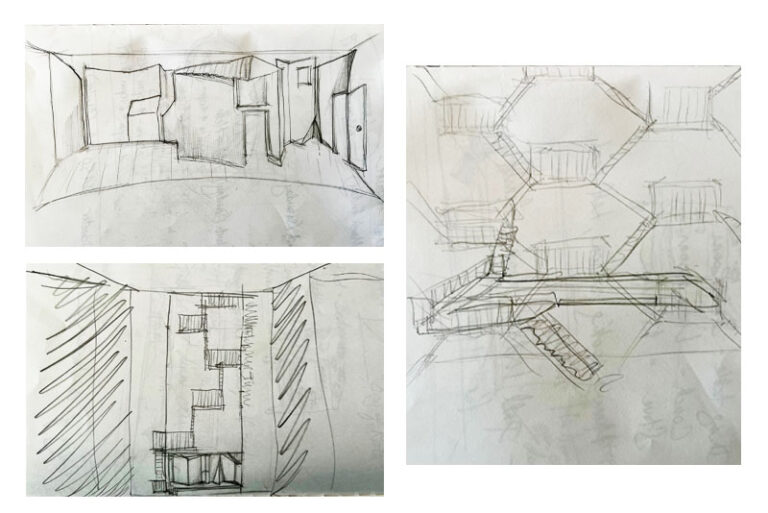
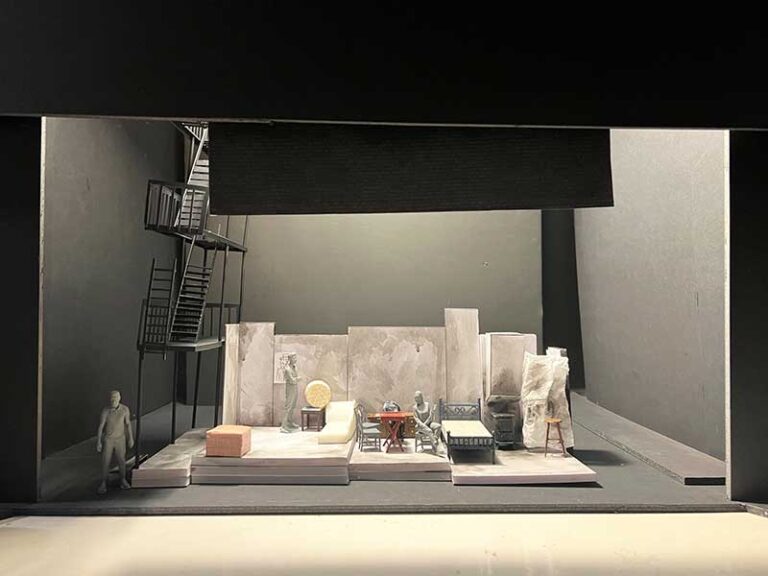
Image: First Sketches for The Glass Menagerie Set Design
Backstage Pass: Meet Kat Chan, the Set Designer Behind The Glass Menagerie
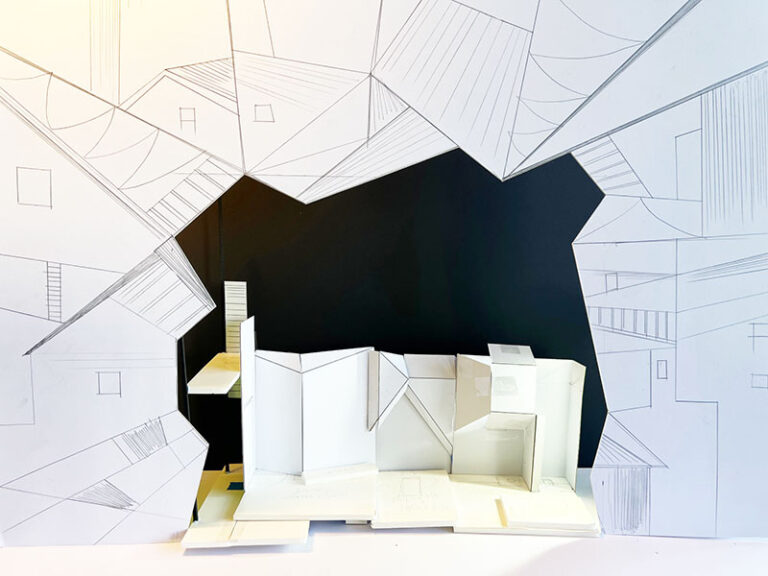
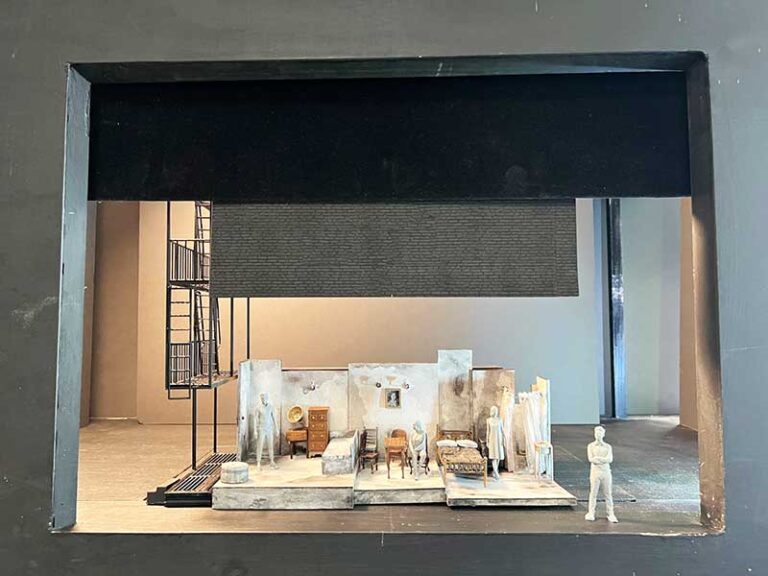
Image: The Glass Menagerie Set Design Process

Q3. What does a set designer actually do? Walk us through it from the moment a production is confirmed.

First step would be to read the script and explore the source material (depending on the genre: music/libretto, etc), researching along the way to help understand the context for the creation of the piece. The next most important step is to meet with the director to discuss the material and what their vision/inspiration is for the piece. Ultimately, it is the director’s vision you are trying to support and serve as a designer. Typically, the conversation between a director and set designer precedes that of the other disciplines, costume/lighting/sound, not only because the lead time to build is longer but also because the set design is the world in which this show sits; it can anchor the language of the other designs.

Backstage Pass: Meet Kat Chan, the Set Designer Behind The Glass Menagerie
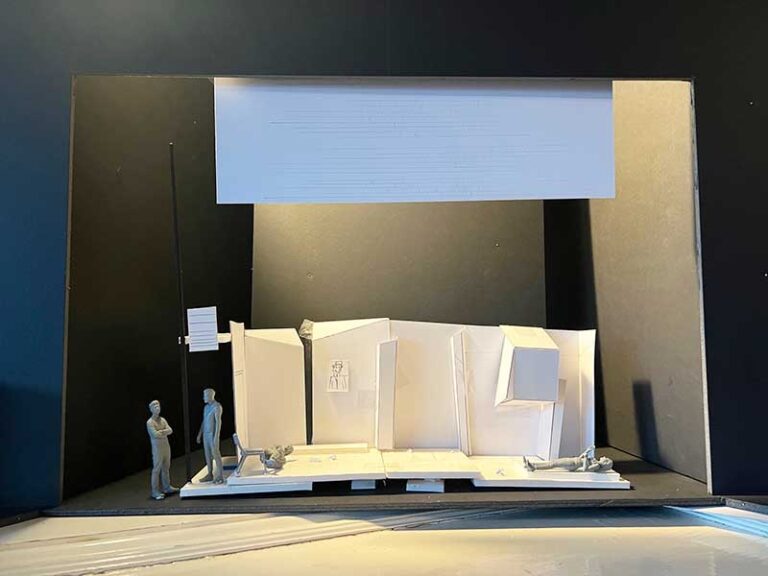
Image: The Glass Menagerie Set Design Process
Backstage Pass: Meet Kat Chan, the Set Designer Behind The Glass Menagerie
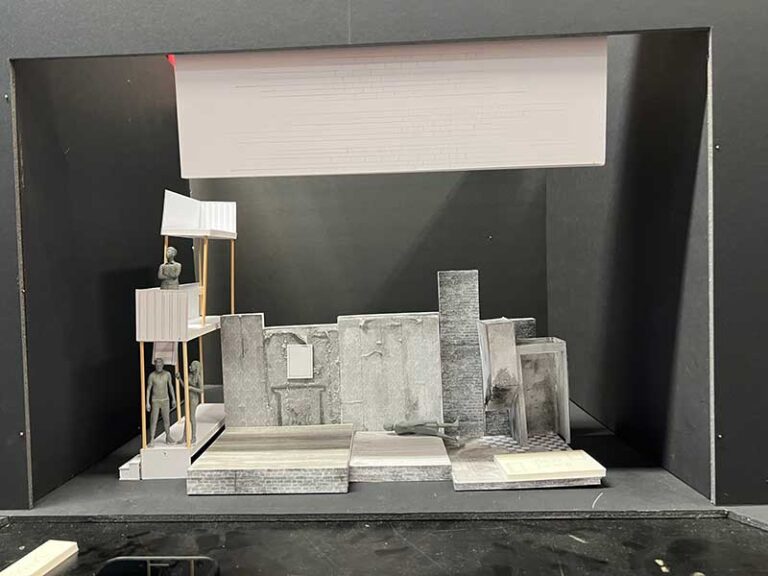
Image: The Glass Menagerie Set Design Process
Backstage Pass: Meet Kat Chan, the Set Designer Behind The Glass Menagerie
Image: The Glass Menagerie Set Design Process
Backstage Pass: Meet Kat Chan, the Set Designer Behind The Glass Menagerie
Image: The Glass Menagerie Set Design Process

Q4. How do you go from a sketch or an idea on paper to something that actually gets built on a stage?

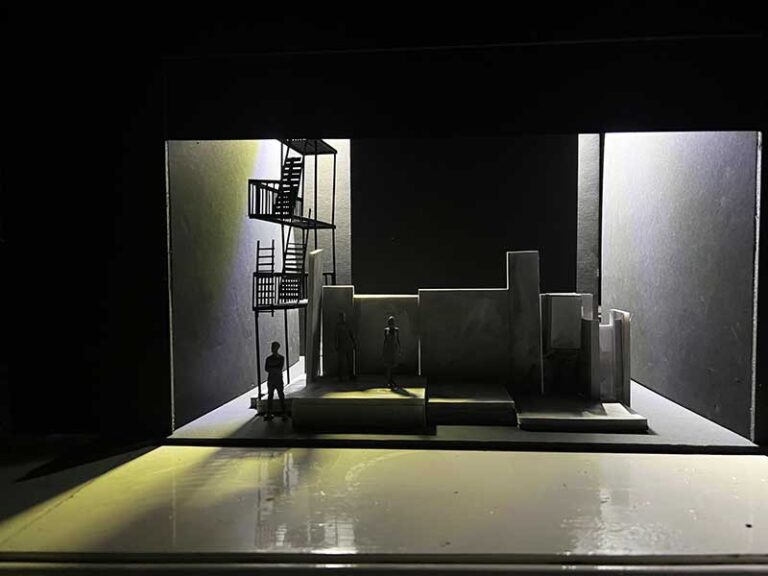
There are quite a few key deliverables between page to stage. I sketch for the first couple of design conversations with a director then move onto rough models because it can be super helpful in meetings where we can manipulate a physical design or CAD model on the spot together. Once there is a core concept it gets solidified into a “white card” model which is a simplified model of the set design, along with drawings this is presented to the theatre company for feedback which may have practical or budgetary issues. This is the stage where the reality of the design needs to be mostly resolved to move forward to the final design presentation. The final package includes: drawings of each set piece and plans/sections showing how the set fits into the theatre along with the final physical model which is what the workshops use to reference for paint finishes. From there the different departments take the documentation to start the construction process. 

Backstage Pass: Meet Kat Chan, the Set Designer Behind The Glass Menagerie
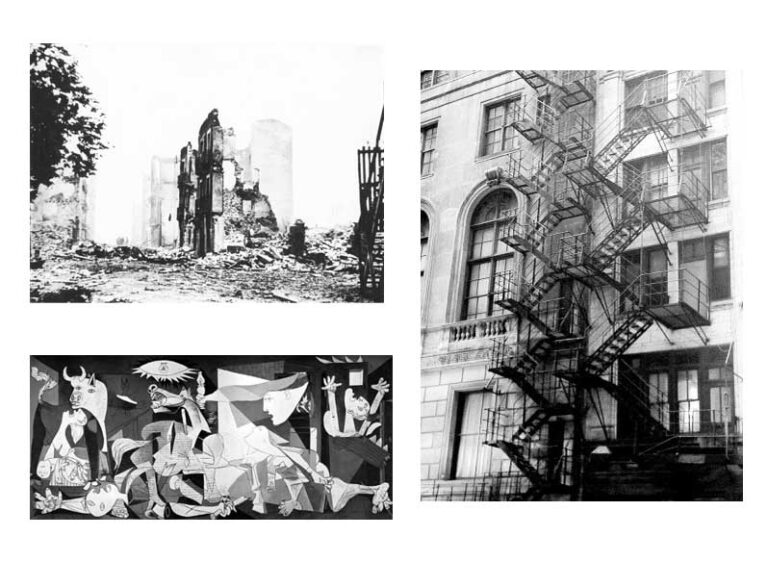
Image: The Glass Menagerie Set Design Inspiration
Backstage Pass: Meet Kat Chan, the Set Designer Behind The Glass Menagerie
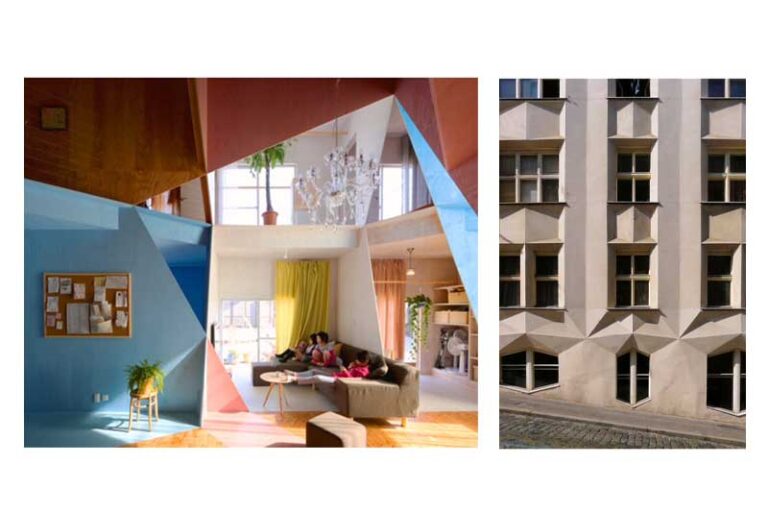
Image: The Glass Menagerie Set Design Inspiration

Q5. Where do you find inspiration when starting a new production, and specifically, how did you approach The Glass Menagerie?

I will generally do a lot of source material research before the sketch phase, this can inform the direction of inspiration I turn to. In the case of Glass Menagerie, Mark had a clear idea of starting with Guernica (the artwork) as well as the photojournalism from the actual bombing of the town, Guernica, because it is mentioned in the script. So between the cubist nature of Picasso’s painting and music Marco had sourced as inspiration, they set the tone of the world we were building.

Q6. What’s the best part of your job?

There are so many! I think finding a good group of collaborators who work well together to create a vision and world-building is the ultimate in this job. Every day is different. I also equally enjoy problem solving with the various production departments to make the design a reality, because at the end of the day that is what the audience will see. 

Backstage Pass: Meet Kat Chan, the Set Designer Behind The Glass Menagerie
Image: The Glass Menagerie Set Design Process, Lighting

Q7. What’s the biggest setback you have experienced in your career, and how did you come through it?

I can’t point to a specific setback but there are times when the flow of work slows down and you have to diversify and do other kinds of jobs to stay busy.

Q8. Have you ever had a design that didn’t work, and what did you learn from it?

I’ve had a few designs that haven’t worked out for various reasons and they were all really helpful learning curves. Sometimes the design was too ambitious for the budget so instead of doing something simply and well, there was too much done poorly that took away from the storytelling. But the main takeaway was always that set design is never a stand alone object, it needs performers and blocking to use it thoughtfully and lighting to shape and highlight it. So it is a true collaboration, sometimes the set design doesn’t have to and shouldn’t do everything.

Backstage Pass: Meet Kat Chan, the Set Designer Behind The Glass Menagerie
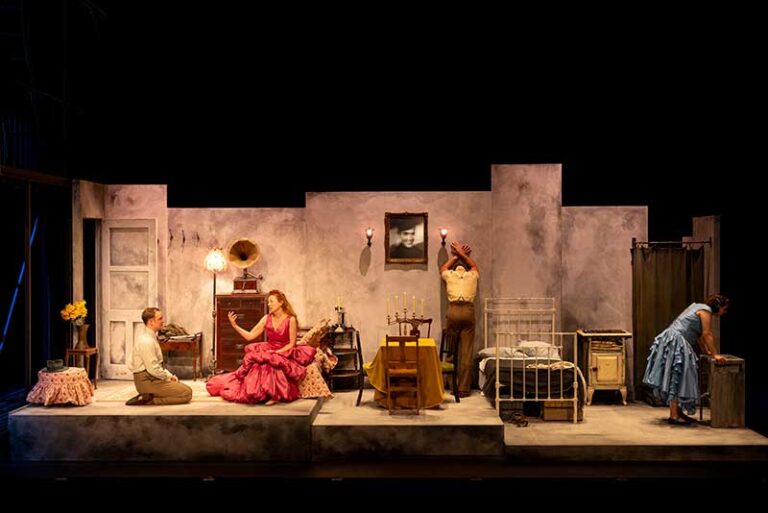
Image: The Glass Menagerie. Harry McGee Alison Whyte Tim Draxl and Millie Donaldson. Photo: Pia Johnson

Q9. What do you want young creatives to know about set design as a career, the things nobody tells you upfront?

It’s definitely not easy, stable, or lucrative; there are no regular hours nor is there an off switch, BUT if you love creating worlds and storytelling, then it is so very rewarding.

Q10. What advice would you give to young creatives who are interested in becoming set designers, and what first steps can they take right now to start building a pathway into the industry?

See as many shows as you can of all genres, be curious to the various types of stagecraft and storytelling. Work on your tools of communication: sketching, model making, computer aided rendering, etc whatever is most effective in getting your ideas across to build a portfolio. Seek opportunities to assist/observe on shows to gain experience and learn or enrol in a tertiary course in Production Design.

Inspired by Kat’s journey? Keep following Creative Industries: Backstage Pass as we meet more artists, designers and creatives turning their passion into a career.

We aim to provide accurate information on teen events, places and support services across Australia. However, we recommend parents check details directly, as details, dates, times, and prices may change.

Yoothz - Discover programs, events and support for teens

Explore Teen Events, Places, and Support Services around Australia

Comments

  • No comments yet.
  • Add a comment